Friday, October 31, 2008

For Women By Women

As I am sitting and writing a news article about safety of women living in India, I want to share with you an article from the web, which I think presents a cool idea. It is an old one (28th September 2007, "The HINDU" Business Lane), neverthless a valuable one. It presents female driving force - in it's actual meaning!

Driving Forsche
A new taxi service in Mumbai powered by women, for women.
WFS

Hers: The Forsche taxi service boasts a team of well-educated, reliable and courteous drivers.

Surekha Kadapa Bose

Every second Saturday of the month, a small office near the City Light cinema in Mumbai comes alive with peals of laughter, excited chatter and lively discussions.

Eighteen women drivers, part of an all-women taxi service called ‘Forsche’, are busy exchanging notes and narrating their experiences of the month gone by over a sumptuous meal.

“It was in December 2006 that I hit upon the idea of starting a pre-paid taxi service for women in this metro. It was just a thought and I wasn’t too sure of the reaction to my venture. But I knew that I had hit bull’s eye when I received a tremendous response for the first full-page advertisement I placed in an eveninger asking for competent women drivers,” says Revathi Roy, 45, the brain behind Forsche.

‘For she’

Incidentally, ‘Forsche’ has been derived from the word Porsche — the German sports car firm — but is spelt with an ‘F’ and pronounced as ‘for she’. Of course, Revathi’s service motto is — ‘By the women, for the women and of the women.’

“As a frequent taxi passenger, I would find it irritating that some drivers would stare at me in the rear-view mirror. Also, I wasn’t too comfortable with the lack of cleanliness of regular cabs and even the way the drivers drove,” remarks Revathi. With her personal savings and some money from friends and relatives, Revathi raised funds to the tune of Rs 14 lakh. Friends and well-wishers bought her the cars and she pays the EMI of these cars plus Rs 1,000 extra to the car owners. Despite the experience of running a successful business — her family owns Windors, an outlet for windows and doors accessories — Revathi was pleasantly surprised at how quickly word spread about her venture. Forsche taxis, the fleet comprises 18 air-conditioned white Maruti Versa cars, are cleaned daily so that the passengers don’t inhale stale air. In addition, Forsche offers its women-only passengers a mini make-up kit that includes a mirror, nail polish remover, cotton buds, clippers and nail files. There’s a selection of magazines and newspapers on board so that passengers are pleasantly engaged during long rides.

Each taxi is also fitted with a walkie-talkie so that the drivers are in constant contact with each other and also with the head office, manned by Revathi. Interestingly, these cabs also double as advertisements on wheels. Currently, the women’s magazine, Marie Claire, has had a pink stripe painted on the taxis, which gives them an attractive and feminine appearance.

“We have a six-month contract with Marie Claire,” explains Revathi, who began the Forsche service this year, on March 8, which is International Women’s Day. “I will later be tying up with Hindustan Lever for an all-India sponsorship.” These good-looking vehicles stand out from among the regular yellow-black cabs in the city. But it’s not just the cabs that are trendy. The drivers are, too.

Dressed in pink or lavender kurta (tunic) and blue trousers, an ink-blue scarf tied Girl Guide fashion around their necks completes the very elegant and posh look. “Not only do our passengers like our looks and that of our taxis, they also enjoy the music we play,” says Annhaita Mistry, 45, a graduate and one of the senior-most drivers. That is another plus point of Forsche — the drivers are well educated and can speak fluent English, Hindi and Marathi. A few are also conversant in Gujarati.

Love of driving

And all of them are passionate about driving. The drivers take home Rs 9,500.

Prachi Jaiswal, 28, a graphic designer from the J.J. School of Arts in Mumbai, is the latest entrant at Forsche. Says Prachi, “I have always loved driving. When I got this chance to indulge in my passion, earn and also work on my freelance design work, I jumped at the offer.” Some drivers pursue higher studies, working part-time with Forsche over the weekends. The 24-hour, door-to-door service is a big hit with the women of Mumbai. One has to just pick up the phone and dial 09323208277 or 09892819245 or 022-24324161 to arrange a cool ride. Forsche’s customers also include outstation women who fly down to the city for work. “They call up and ask for the taxi to be at the airport to pick them up at a particular time,” Revathi says. For instance, Bangalore’s Swarupa Gangadharan always books in advance and enjoys a comfortable ride with Forsche.

Then there is 81-year-old Dr Nalinee Odak, a former physician at ESIS’s MG Memorial Hospital in Parel, who likes to engage a Forsche. “Being a senior citizen, I found it difficult to move around. But with Revathi’s taxis, which have reliable, well-behaved and courteous women drivers, I have started travelling around the city with ease. Now I use their services at least two to three times a month to visit my sister at Walkeshwar, or my friend at Dadar,” she says.

Comfort’s price

But the comfort comes at a price. Forsche charges Rs 200 per hour. Revathi concedes, “Our services are 20 per cent higher than other taxis. But with us, women can relax and enjoy the ride without having to worry about their plunging necklines as there are no gawking male drivers looking in the rear-view mirrors.” The facilities are only available to women, though. No man can ride in a Forsche taxi. Not even husbands or sons, though children up to 12 years are welcome. “The family can always hire a regular taxi,” suggests Revathi.

In the last six months, these drivers and their regular customers have become an extended family that meets often and shares benefits. Any tips earned are put into a common kitty, a ‘handi’ (clay pot).

“We break the handi every second Saturday and distribute the money equally among all the 18 drivers. Every driver makes an extra Rs 1,000 - 2,000 a month from these tips,” says Revathi. The venture has already broken even. “From next month I hope to make profits,” says Revathi, whose last six months have been fraught with many personal tragedies.

She lost her husband, her mother and her grandfather. Revathi credits her family for her accomplishment. “The immense support that I have got from my parents-in-law and my three children — Satyajit (21), Shurojit (18), Shubhojit (12) — has made my venture very successful,” says the petite but strong-willed entrepreneur. What are her future plans for Forsche? Having tasted success, Revathi wants to expand her business to Delhi and Bangalore. In fact, she has already set up the Delhi office and her eldest son has begun the initial groundwork. Here’s hoping she has a smooth ride.

http://www.thehindubusinessline.com/life/2007/09/28/stories/2007092850020100.htm


Thursday, October 30, 2008

Diwali in Jaipur

Though I am presently in London and not in Jaipur, I do keep the pulse on what is happening there. And hanging on the phone with India every day is a great help too! Here for your pleasure are few pictures of the colorful decorations that light up the Pink City every year for this festive season.


Old city.

View of Jaipur from Nahargarh Fort.

Raja Park.

Offices of Rajasthan Patrika - a regional Hindi newspaper that I read. All the pictures here are at their courtesy.


Busy streets of Raja Park again.

Old city.

Monday, October 27, 2008

How much are you worth?

Recently I have spent countless hours writing my CV, updating it and making various forms of the same, boring CV document. Trust me - I prefer to write up a 5000 words essay than dive into the challenge of CV writing boredom. It is an art - how much do you sell yourself for? How much of yourself can you advertise on the first page of your CV, before fed up Human Resources manager will be prompted to put you in the 'No' file? How many people do you need to outstand and outnumber to get to the top? And how not to run out of steam in the meantime? Tough questions for the tough living in the mainstream of our human society. Some people have competitiveness in their blood. I don't. When I used to train target shooting I never wanted to compete against the others. But the cruel world is not set up like that.
So how much are we worth at the end of the day? Now see the crude reality.
Forget your CV. Die quickly so you can save some money on your exit.
I took this picture recently in Kolkata Crematorium near Kali Ghat.

Monday, September 29, 2008

Unity in Diversity

Here are a few cool pictures which were given to me by my friend Dhara who lives in Delhi. These pictures were taken by her in a call centre where she works with a bunch of other enthusiastic young people. Whenever I look at them I think: "unity in diversity! teamwork!". And then I ponder on what my friends told me once when I described myself as a teamplayer: "Yeah... cool, but did you notice that it must be always only YOUR game???". There you go. Wanna be part of my game then?


Wednesday, July 23, 2008

Item Girl

Did you ever feel you were an item girl? Well, I am not speaking here of item girls doing a 5 minute song-flick-thing in a Bollywood movie. There is other type of item girls. Here in India if you are white and a westerner - you are an item! If you are blond - you are high value item! Everyone wants to speak to you, take a photo with you, invite you for functions so that they can show you off to their friends and family. Watch out for the wedding season - there is nothing more powerful than having a few white videshis dancing in your bharat (wedding procession)! Everyone will look, whoooohaaaa - you made your statement, and increased your local status by 6 points! White people around you - you must have money, charm, style, and connections! And maybe you can even manage to leave India on their invitation and become and NRI! Wah, wah, wah!
But tell you one thing, guys - as much as I am white and blond (and truly hope that I am not one of those 'thick blondes'!), I have no money, no status, no home in foreign land. I am completely useless. Oh, maybe I should then hook up with some wealthy industrialist over here. What a great idea, wah, wah, wah!

Saturday, July 5, 2008

108 - Indian Emergency Call Number


If you are ever in trouble while in India, simply dial 108! India recently launched a new scheme and 108 has become an emergency number for some of some states. Here is an article about it form http://www.india-server.com/news/dial-108-for-emergency-in-india-1805.html:
"You may have often seen in the movies or even read in books about ‘911’ the number the United States denizens dial incase of emergency situations! Now a similar service is being introduced in India by the Emergency Management and Research Institute (EMRI), which is soon about to launch this service in Madhya Pradesh. In a recent statement, Health minister Ambumani Ramadoss was intimated by Union Telecom minister A Raja that 108 is being finalized as the national toll free trauma care number to the institution.

It was further informed that 108 is already being used as the toll free emergency number in Indian states such as Gujarat, Andhra Pradesh, and Uttarakhand. On the other hand, even states like Rajasthan, Madhya Pradesh and Tamil Nadu have inked MoU with the EMRI Institute for availing this service. Indian states like Jammu and Kashmir, Assam and Kerala too are charting plans for fixing the number 108 for all emergency purposes.

Every time a caller dials 108, his or her call will be received by a 24 hour call centre which will take down all important information from the caller. After this, the call centre will locate an ambulance, fire vehicle or the police vehicle depending on the type of emergency through GPRS technology and dispatch it to where the help is needed. The EMRI Institute has received top recognition in the health care category at the 2008 computer world honours programme."

Monday, June 23, 2008

The Non Sacred Sounds of India

Well, just as people appreciate the sacredness of India with it's mantras, tantras, sound of aratik songs and ringing bells, I am pondering about it's non sacred sounds that surround me every day...

Here you go, that is what the background sounds of my life here consists of:

1) Sound of clearing the throat followed by spit. From the window of my bathroom I can hear that every morning from my neighbors' house.

2) "Breaaad, breaaad!" - that's the guy who sells bread every morning in front of my house. It is followed later on in the day by people selling brooms, subjis, newspapers, chai, muri, namkeen, ice cream, samosas and so on.

3) Buzzing of the AC. And fan.

4) Buzzing of the energy saving light bulbs (the long one's that make you feel that you are in a hospital ward!).

5) Hooting of scooters, bikes and cars.

6) "Radio Mirchi" - (They always say: "Radio Mirchi sunnewale - always kush!" - those who listen to radio Mirchi are always happy!)

7) Bollywood songs - my addiction!

8) Silly TV advertisements.

9) Questions asked by absolute strangers: "Which country do you belong to? Are you married?" - next time you ask me, I will strangle you, by the way.

10) Sexual harassment lines and sleazy chat up lines - as a response, I have become expert in Hindi dirty language.

11) A guy who lives around the corner and dressed up as a clown follows people around playing a tambourine.

12) Bharat (wedding) processions that march back and forth in front of my window.

13) Brass bands that are just so uncool.

14) Screaming kids. Screaming big families.

... Any other ideas and experiences anyone out there?????

And thanks God that India has so many sacred sounds to balance it all out and give one some tranquility, so that one doesn't go totally nuts by living here!

Tuesday, May 27, 2008

Sri Radha Ramanji's Appearance Day

In Vrindavan, after Narasimha Caturdasi, day after purnima (usually it is the purnima day but somehow or other this year tithi worked out different), we celebrated Sri Radha Ramanji's divine apperance day. Radha Raman Mandir is famous and well respected in Vrindavan and twice a year - on Radha Ramanji's appearance day and Janmasthami a maha abhiseka is conducted. Certainly, great festivals to attend! This year, though it was late May, the weather was great - it was cloudy and rainy, thus I didn't feel any discomfort due to the heat. I took some pictures, so here they are for you to enjoy. I worked together with Chandan Goswami (Padmanabha Goswami's son), who runs a great website: www.shriradharaman.com, thus some of the photos that I am posting here, you can find there too. I encourage everyone to have a look at that website, you will find there a lot of interesting things to read and great picture galleries to look at.
On the day of the abhiseka, all 40 Goswami families are present on the altar taking their turns in bathing the Lord. Here, on the right, you can see Chandan Goswami.

Radha Ramanji enjoys His bath in 500 liters of milk and other auspicious substances.

Pancamrita distribution.

Radha Ramanji comes out from His inner sanctum during the summer season (starting on the day of Chandan Yatra). He enjoys a fresh flower decoration every day!

Twice a year (Radha Ramanji's appearance day and Janmasthami) a special darsan is possible to be seen - maha cloth of Sri Caitanya Mahaprabhu which was presented by Him to Gopal Bhatta Goswami.

Sunday, May 25, 2008

1+1=11

In Hindi we say 1+1=11. It means that when people keep together, they are much stronger than just being alone. Travelling through India and living here, I often see 1+1=11 in action. Have you ever seen a Tata Sumo with 25 people packed all tightly inside - one family doing a yatra together or just on their way somewhere? Being in India of course means being exposed to crowds too. People sometimes ask me if I feel lonely here. How could I? Living in India means that India lives with you too, whether you like it or not! Loud crowd is everywhere. Just see what a travelling Indian family consist of: a bunch of ladies (the seniors of the family plus the younger generation) - the real bosses of the group. Of course they all come with gingly ankle bells and bangles (how can life go on withouth these?). Then bunch of men - all loud and happy. They only become little bit more silent when they finally sit down to eat. And a bunch of kids in squeeky shoes - skueek, skueek - don't I love this sound? How cute.
In India basis of human life is rista (relation= family) and kartavya (duty). Now, where do I fit here? Single videshi (foreigner) who roams around India in pursuit of advancement in Krsna consciousness, study and widening career prospects. Oh, where to put me? I have no other 24 members of my family that I could stick in Tata Sumo to travel with me. Perhaps I am not so good in keeping up my duties. Possibly I even don't understand what they are. So I am a social misfit in the indian society. Yet, I live in this society as a happy, viseshi misfit. Why not? This society of a population of 1,129,866,154 is happy to live with me. Why not? 1+1=11. United we stand, divided we fall!

Narasimha Caturdasi in Vrindavan

Here is the darsan of Vraj Narasimha, a wooden deity of the Lord in a small temple situated in a galie leading to Radha Vallabha Mandir. This is where I celebrated my Narasimha Caturdasi this year. Mood was great and devotees enthusiactically qued to receive maha-prasad and caranamrta.

I also visited Radha Raman Mandir because in the evening the Goswamis were performing an abhiseka of this Narasimha Sila, which was originally worsipped by Gopal Bhatta Goswami.


Local boys dressed as Lorn Narshimhadev performed dance through the streets of Vrindavan and visited many temples to perform for the deities as well. Just after the abhiseka, they entered the Radha Raman Mandir.

The abhiseka.
Radha Ramanji's darsan on that day.


Saturday, May 17, 2008

From Jaipur...

Jaipur is going back to normal life. Though shaken, people of Jaipur don't give in. Jaipur has been known for it's very low crime rate and lack of tension between various religious communities. Both Hindus and Muslims have condemned the attack, and as one of the victims described: "Terrorism knows no religion. It kills everyone." Though the responsibility for the Tuesday bomb blasts was claimed by an islamic group, areas which were targeted belonged to both communities. Market at Badi Choupad is run mostly by Muslims and I remember happy bangle sellers from there who would offer their goods to burkha-clad ladies. At Johari Bazaar, not far from the blast site is a very popular Jama Masjid. On Friday special prayers were offered at the Mosque for the blast victims.
Here is an article from the Jaipur edition of "The Times of India" on that subject:
"Blasts fail to weaken Hindu-Muslim ties" - 17 May 2008, Avijit Ghosh,TNN
JAIPUR: It's late at night. And there's nothing really that distinguishes Islami Kallu Hotel from the rows of similar shops in Ramganj area. Except that it has far more customers than all other shops around. And the reason, says shop owner Kallu, is that it serves the best mutton qorma and other Mughlai delicacies in the town.
"My biggest customers are Hindus and they come from all parts of Jaipur. Some of them drive in from as far as 20 km to eat here," says his son Zahooruddin.
Designed to drive a wedge between the city's Hindus and Muslims, the Tuesday terror attack was meant to change all that. But it didn't happen. "Whoever was trying to divide the two communities has failed," says Kallu. It is 72 hours since the blasts and the Hindus are not back in big numbers yet. But Kallu, judging by the mood of the city and the way it has reacted everywhere, is sure that there won't be any big cracks in the relationship.
Apart from the respect for each other that comes with a sharing of lives, professional interdependence between the two communities has gone a long way in ensuring that the quality of relations doesn't dip. "Even in a restaurant like mine, there is plenty of inter-dependence. We buy ghee, oil, flour, vegetables, spices” everything from Hindus. I operate in cash but I am also open to credit with them," says Kallu.
Sitting outside Zahiruddin's Naeem Book Depot, Abdul Wahid says that many Muslim women make embroideries on fabrics. The factory owners who give them work are Hindus. "It's an economy of inter-dependence," he says. A few Muslims sitting around the shop reveal that they just hoped that the blasts would not cause a negative fall-out. "But the fact that there have been no repercussions shows that the worst is behind us. The maturity shown by citizens of Jaipur is an example to the world," says Wahid.
I P S Bagga, former president of Hawa Mahal Bazar Vyapar Mandal, estimates that Muslims form about 50% of shop owners in the Hawa Mahal area, about 35% in Johari Bazar and about 5% in Bapu Bazar. In several city-based industries such as gems and stones, shoes, fabrics.” the workers and the owners often are from different communities.
Figures are hard to come by but everyone admits that a majority of the artisans employed in cutting, polishing and shaping are Muslims. The owners are both Hindus and Muslims. Bagga sums up the situation: "The serial blasts have saddened people. But Hindu and Muslim shop owners have always cooperated with each other. That will never change."

Wednesday, May 14, 2008

Scenes from the SMS Hospital in Jaipur

Here is the map of of the bomb blasts in Jaipur. Those of you who have been in this city will notice the cruel precision aimed at killing applied here. The spots that were hit are the busiest places in the old city. This map shows 5 places, but in fact there were 9. 12 minutes before the blast I left Badi Choupar to go to see Radha Govindadevji.

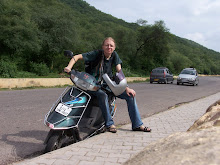
There is an all day curfew in the city, all shops are shut and the streets are deserted. Yesterday I decided to go around the city on my scooter to see what the atmosphere was like. Most of the roads were closed with a lot of police present at every major junction.
Panch Bhatti Circle at MI Road.

My neighborhood - Raja Park; usually this road is full of traffic.

Not knowing what to do with myself in a deserted city, I decided to buy newspapers and check the latest news. As I was driving past the Sawai Man Singh Hospital where most of the bomb blast victims were treated, I decided to stop my scooter and go in. By now, dead people were being removed to the morgue so that the space for those still living could be made. SMS Hospital is the biggest one in Jaipur.


Whole scene had a live coverage.


Here families and friends of the victims were checking the lists posted on the walls saying who was admitted to the hospital. Once could sense tension on the faces of those looking at the wall. I looked up the names - people of all ages and from various parts of Jaipur were admitted. On the evening of the blasts police had to keep the crowd in control here, because families were frantically trying to bring their loved one's in, or were trying to find out if they were in the hospital. Some were looking for the dead.

The "blood bank" was busy with the people willing to donate their blood.

Corridors were made into makeshift wards. As I walked around the hospital on the first floor where the "Day Care Centre" was, I could see various people wounded, lying under drips, with families surrounding their beds. As I walked up, the scene got more gruesome and I didn't dare to take any pictures. There, most of the people were in very bad condition, mostly with limbs missing, full of blood stained bandages. Faces of the victim's relatives expressed enormous suffering too.

As I walked back downstairs, someone was being taken away. Meantime on the corridors in the hospital one of the workers was washing off the blood from the walls.

I dread what may be behind this picture. It's from Badi Choupad bomb blast site. At 6.30pm I spoke with the man who was selling these drums in front of Hawa Mahal... Afterwards he headed towards Badi Choupad...

Bomb Blasts in Jaipur - Pictures

Here I have nothing to say here, the photos speak for themselves.


Jaipur Bomb Blasts

Yesterday night 9 bombs went off in the old city of Jaipur, in the main parts of the busy bazaars.


Here is an article from "The Times of India":

JAIPUR: Terror struck yet again — this time in Jaipur, at the busiest market, at the busiest hour, aimed with chilling precision to kill, maim, terrify and cleave the country. At last count, the toll was 80 killed, and with over 150 injured, it could go up. (Watch)

The first blast took place at 7.20pm on Tuesday in the crowded Johari Bazaar and within 15 minutes seven more blasts occurred in adjoining areas in the walled city — near the Hanuman Mandir, which was milling with devotees, near Hawa Mahal, at Badi Chaupad, Tripolia Bazar and Chandpole.

Within minutes, the entire market was a picture of total chaos. People ran screaming, jumping over dead bodies and severed limbs, skirting mangled rickshaws and damaged cars. The piercing wail of ambulance sirens replaced the firecrackers that would go off every other day in Jaipur to celebrate its victorious Rajasthan Royals T20 team.

Terrorists displaying the telltale tactics of Lashkar-e-Taiba and SIMI struck with bombs planted on cycles and cycle-rickshaws. In the past three years, this is the 21st terror attack outside Jammu & Kashmir. Chief minister Vasundhara Raje said, "We will not tolerate this."

Police later arrested a man from Mumbai. Rajasthan's director general of police, A S Gill, said the attacks were designed to cause maximum damage and the sites had been picked with care. He confirmed that bombs had been planted on brand- new Avon cycles. Similar cycle blasts on September 8, 2006, in Malegaon, Maharashtra, had killed 38 people during a Muslim festival day. Bombs on cycles were also used for the attack on the Faizabad court.

The Malegaon attacks were blamed on LeT and the banned Students' Islamic Movement of India.

The Jaipur attack might have been worse had three unexploded bombs not been defused in the walled city area. Another bomb was defused in the upmarket Raja Park area, triggering fresh fears. Mercifully, the city was keeping calm.

***************************************
Right now the city is under the curfew, Raja Park where I live is almost all shut down. Yesterday I missed the blast in the city by 12 minutes, but I saw what was happening afterwards. Late afternoon I was doing an interview for my academic research at Johari Bazaar, then I moved on to Hawa Mahal where I left my scooter. Bomb was exactly where I have parked. I went to visit one temple across the road and then went to Govindaji Mandir. On my way out from the temple I could see that things were not right - people rushed off somewhere and police came ready for a laathi charge. Big traffic, streets closed off, shops all shut. I looked up at Radha Damodar Mandir - temple was also shut and then I knew that something awful must have hapened since it was an aratik time for them. Police vans, ambulances, riot police and dispersed, disoriented crowds confirmed my fears.

Krsna has saved me by making me to go for Govindadevji's darsan at 7pm instead of 6.15. First I was planing to see Govindadev at 6.15 and then do my things after 7pm at Johari Bazaar, Hawa Mahal, Sanganeri gate - exactly the time and place of the blasts. Somehow or other I decided to have a longer darsan at 7 o'clock, instead of a 15 minute one after 6pm. Haven't I have done it - I would be well gone, since the route I always take is where the bombs were. I saw one of my teachers yesterday during the day, and since she knows that I am always at that time in these areas on my scooter, the first thing that she did after hearing about the bombs was that she went to my house to see if my scooter was there. It wasn't - I was out. She finally reached me on the phone and spoke to me at 11.30 pm to her relief.

While I was sitting in the temple yesterday night and looking at Govindadev I felt an inspiration to chant extra rounds and Gayatri, what made me to stay longer in the temple than I was expecting. Krsna's mercy, otherwise I wouldn't be here to write this blog entry...

Monday, May 5, 2008

Student Life Bliss

I am presently in Vrindavan, relaxing, and chilling in the not-so-chilly Vraj. How nice to be back! Everyone is anticipating the upcoming Chandan Yatra and the devotees are enthusiastically making the sandal wood paste for the Lord.
As I am here, I am recovering from all the stress and hard work of my Hindi exams in Jaipur. Here are a few memories of my academic year which I have just completed.

Govindadev! He is certainly the king of Jaipur! It is a great priviledge to be able to have His darsan on a daily basis. Jaipur people certainly beat everyone in their level of devotion to Govinda.
Me - always busy, always on the go. Picture taken secretly by my friend Zain.
Zain and Emily - fellow Londoners, SOAS students and my Jaipur flatmates. This table was the centre of the life in our house!

And this is how it looked just prior to the exams!

We cleared the table occasionally - just as here, when we decided to have a tennis tournament of the Jaipur, Jawahar Nagar district, sector 6! Of course we had to prepare for our exams, maukhik prastutis (oral presentations), write final projects (oh, don't I just love typing in Hindi?) and learn all the sanskrit, urdu, pharsi, and hindi prefixes and sufixes. But how not to refuse the game?

Emily always won!

Indian educational system means: if you are late = you are dead! Here are Zain's precautions to avoid the troubles at school.

Me, friend Louise and some of my Hindi teachers, relaxing after the examination was over.

This is how Zain rated my scooter driving skills.

And me again - living my busy student life. Picture taken at 2.30 am, and no, I didn't just get up to go for mangala-arati. I just didn't have time to go to sleep yet!